

the anxiety of being well-read
You don't need that ugly "100 Best Novels" list from The Guardian

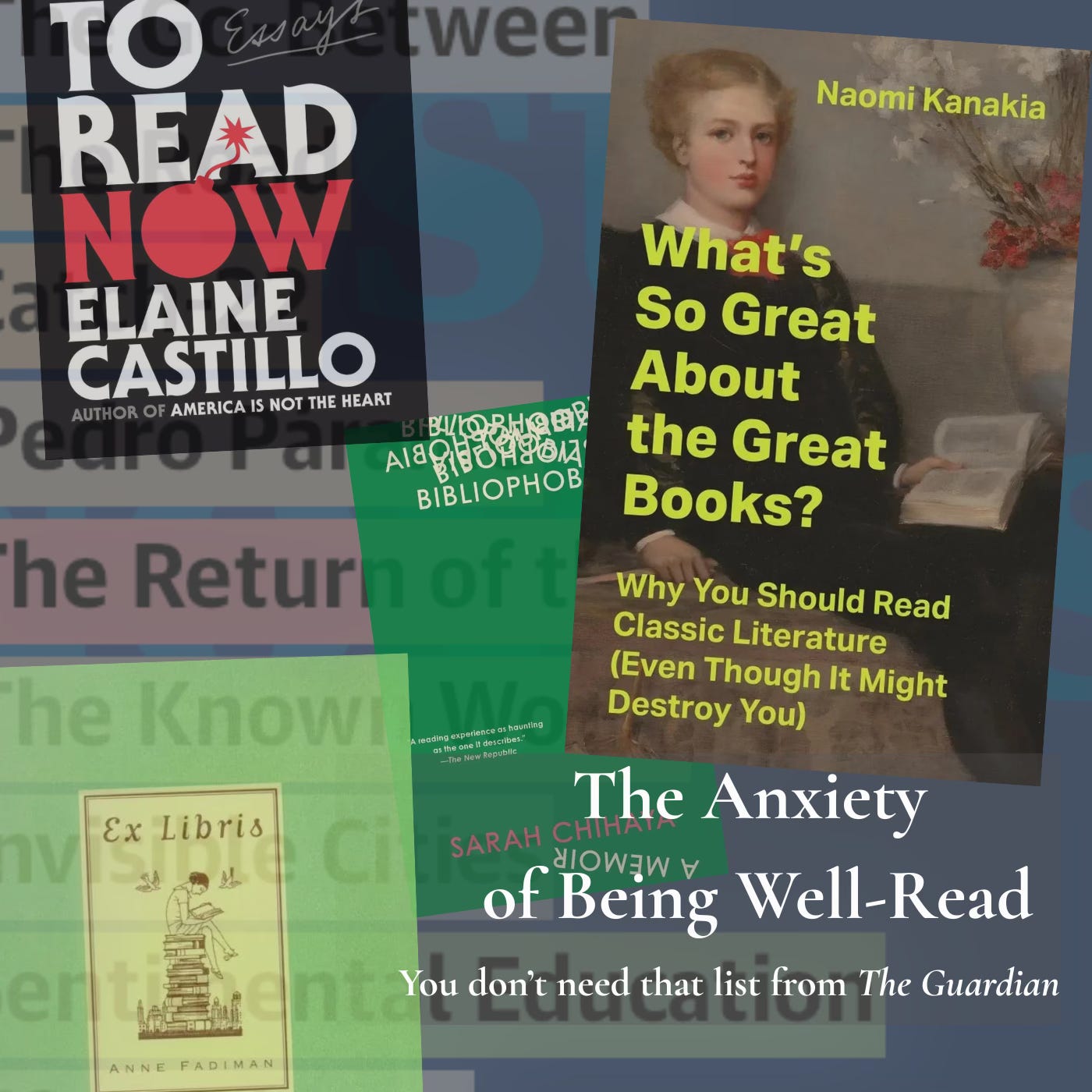
Hello readers,
If you have ever taken a screenshot or downloaded a tally of how many books you’ve read from some interactive “100 Best Novels” list because you secretly suspect other people know something you don’t about taste, seriousness, making a life, or how to pay attention— only to delete it because you’re annoyed by insinuations that reading anything else is unintelligent or that you will be freer, happier, a better citizen if you follow this plan—then this list is for you. The Guardian doesn’t even know you!
The Booktender’s concoction for May features writers who have built entire identities around reading, and sometimes wrecked those identities the same way. These books approach literature as aspiration, inheritance, seduction, virtue signaling, and intellectual performance while recognizing that reading alters brain chemistry, for better or worse. Collectively, these books challenge feel-good platitudes about reading as a universal good in favor of something more complex: the mysterious, often uncomfortable, pursuit of genuine encounters with art.
📚🍹
📖What’s so Great about the Great Books? Why You Should Read Classic Literature (Even Though It Might Destroy You)
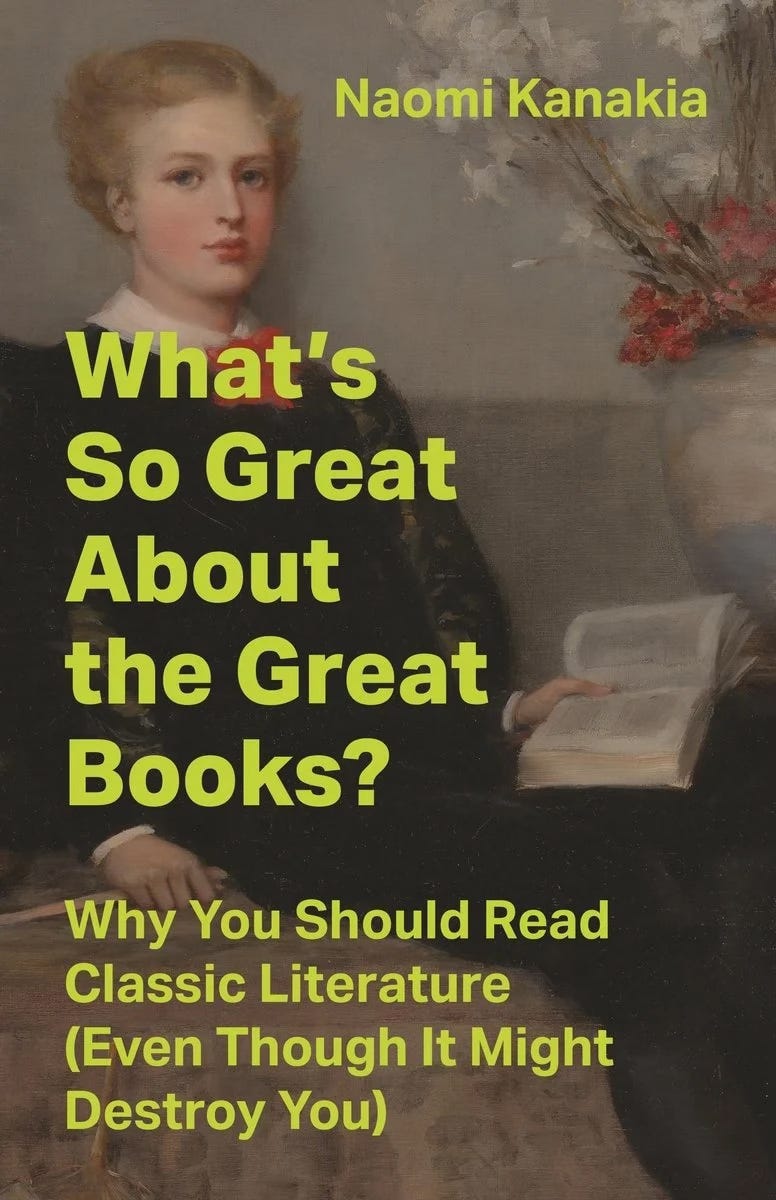
Have you ever had FOMO about not reading the classics? In her forthcoming book, Naomi Kanakia positions herself as an encouraging guide for contemporary adults who want to be well-read and yet are not sure whether reading Great Books will reward their time. Her expected reader is likely a skeptical liberal in the U.S., on guard against anything that smells of fascism and the erasure of women and marginalized people, who might be persuaded by a message “shilling for White culture,” specifically the titles included in Fadiman and Major’s The New Lifetime Reading Plan (1997), if it comes from someone like her.
A 14-step plan to getting over it
With the balanced rhetoric you might expect of a writer who has thoroughly absorbed ancient Greek lessons in philosophical thinking, Kanakia talks herself through 14 common contemporary objections to reading a problematic Western canon. These are phrased as questions including, “Why not read other books that are equally beautiful but have better politics?”, “How do we know a book is ‘Great’?” and “Can’t reading the Great Books be psychologically damaging for marginalized people?” Anecdotes from her early adult life— as a novelist with an MFA and an undergrad degree from Stanford in Econ and Alcoholism, and as a trans woman of Indian descent raised by highly successful immigrants parents, trying to figure out how to launch the bourgeois life she wants on her own terms— keep What’s So Great About the Great Books from turning into a dry treatise. She believes passionately in her readers’ potential to develop their taste and sensitivity through self-education, and that a self-guided approach to the classics can be a subversive source of joy and power (THEY are dead and WE are ALIVE!) for readers whose perspectives and identities are missing from or demeaned within these texts. She wholeheartedly trusts the benefits of this reading will show up in ineffable ways when it comes to making the specific moral choices of adult life, as they have for her.
But who knows? She acknowledges that our mileage may vary and we may very well have more important things to do. It would be absurd to think reading these books alone will make anyone into a good and useful human if the rest of their education and life experiences have not shaped them that way. But in any case, never fear, Kanakia assures the reader. Such a project is also unlikely to cause bad politics to rub off on you. And if they do, as might be the case in her own awakening, upon reading the Mahabharata, to potential deep truths within caste-based Hinduism? It is good to recognize that our modern vanities may be just that. If reading the Great Books honestly could open her to beliefs she had previously discounted, so goes the argument, perhaps some greater understanding of humanity and more intellectual sincerity can sneak into the culture by way of the canon’s oppressive champions, too.
An self-opening gate is still a gate
Kanakia has also been blogging about books for two decades now, and she’s not afraid to mix and match patterns when suiting up to write this book. She positions herself in a relatable way to the searching reader, someone whose evolution you can follow online and who will occasionally offer a controversial take that makes you feel like you’re in the know and on the scene. I really respect that she cops to having only read about two-thirds of the Lifetime list she recommends in What’s So Great, while reading almost 2,000 other books during the same period, including texts from a wide range of world traditions excluded from these lists, as well as 20th century and contemporary American books. She’s in no way arguing that these particular classics are the only books worth reading, only that these are the best, most “universal and timeless” reads if you want to really understand what is good in literature and how specific people thought and lived in societies very different from the contemporary world.
Spoiler: the tautology that these books are “universal” and “timeless” because they’re the best of what was passed on in our society, regardless of how that happened and what may have been lost in the process, is not resolved in this book. You are either willing to accept tradition as authority with or without side-eye and proceed, or you are not.
Which raises the question: how does she know that her capacities for sensitivity and intellectual rigor come from reading these particular 165 texts and not the other 1,800 she read? She just knows! Because she has read these books and has good taste! It is a mystery how this happens! That she is willing to undermine her own point this way is a sly nod toward her main thesis, which is one that even the most strident decolonialists would have to agree with even if they make different reading recommendations. This is what genuinely great books do that other books with perfectly correct politics do not: they contradict and argue with themselves, and treat their characters as fully complex people, not essentialist representations of their class or ethnicity.
She’s at her best when she sticks to this positioning as an inexpert expert encouraging self-education, and steers clear of suggesting what should be taught in college or high school or how social movements she does not have a direct stake in should approach their liberation. When she slips into takes on critical pedagogy etc. as someone who apparently has not spent a single day of her life in a public middle or high school, she forfeits some of her self-awareness and credibility.
The books I’ll keep
Personally, I found her brief readings of passages from some of the works to be her most compelling evidence. My favorite was her take on the anti-Semitic yet sympathetic characterization of Rosedale in House of Mirth. I loved that book but as a woman married to a Jewish man parenting a daughter preparing to join the tradition, I have complicated feelings about this portrayal and felt somewhat guilty about keeping this book in the house when I have too many books now anyway. I keep putting it in the donate pile then taking it back out, which is something I also do with some of the best sexist books I have read. The thoughts go something like: “I get it and I even enjoyed it. But it’s uncomfortable to be reminded by this book that the world and my own mind are shadowy places. But also: Grow up! You are not the books on your shelf. Or am I?” Now I have a new guideline: if the author is dead, I probably want to keep the book. If not, I can give it away without second thoughts. See, Kanakia’s method is already helping me with weighty moral decisions!
Another effect of reading this book is that I realize I am probably most satisfied with my own self-guided reading plan when it includes roughly one classic out of every 10 books, leaving plenty of room for reading 20th century books and recent releases. Fortunately, Kanakia’s list cribbed from Fadiman and Major is included as an appendix, and I am a subscriber to her newsletter, so I don’t have to buy another book (thank you for the ARC, Naomi) or look at any ugly Power Point-ish online lists to remind me of all my options.
To get yours
It’s out May 26 but I’ve heard rumors that Bookshop.org is shipping pre-orders as they come in, so you might get it sooner.
📖 Bibliophobia: A Memoir by Sarah Chihaya
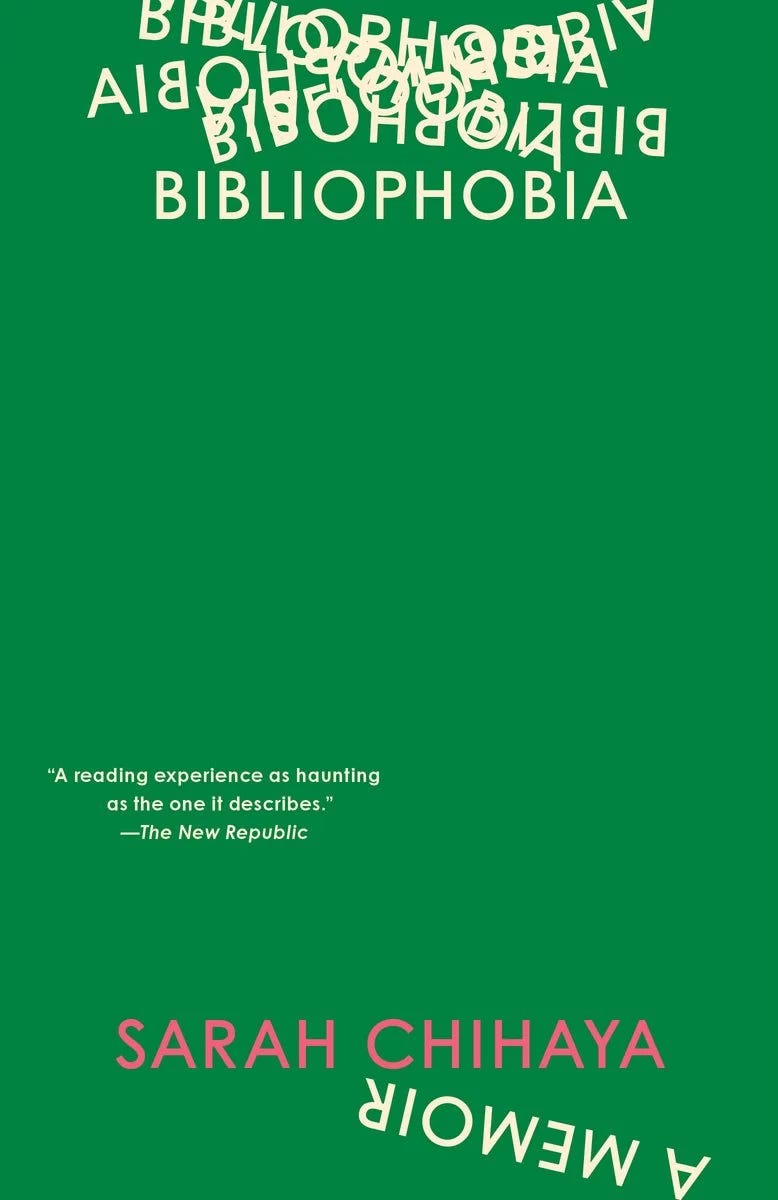
While Kanakia’s tag line about books “destroying” you is tongue-in-cheek, Chihaya has written a memoir about her hospitalization for severe depression and an ensuing inability to read and write, despite previously have identified as a self-congratulatory “book person.” When this came out last year the hype around it really turned me off but having recently experienced my own minor crisis of being unable to concentrate or take any joy from reading, while simultaneously existing to the world as a “book person” which I made light of in this post, I’m intrigued. Memoir and Autobiography has been the most reliably excellent among the Pulitzer book prize categories in my opinion, so seeing this on the finalist list also renewed my curiosity. So far I find it a bit overly dramatic but also darkly humorous, plus it has an intriguing list of Chihaya’s “life ruiner” books included in the front pages. Read them if you dare!
📖How to Read Now: Essays by Elaine Castillo
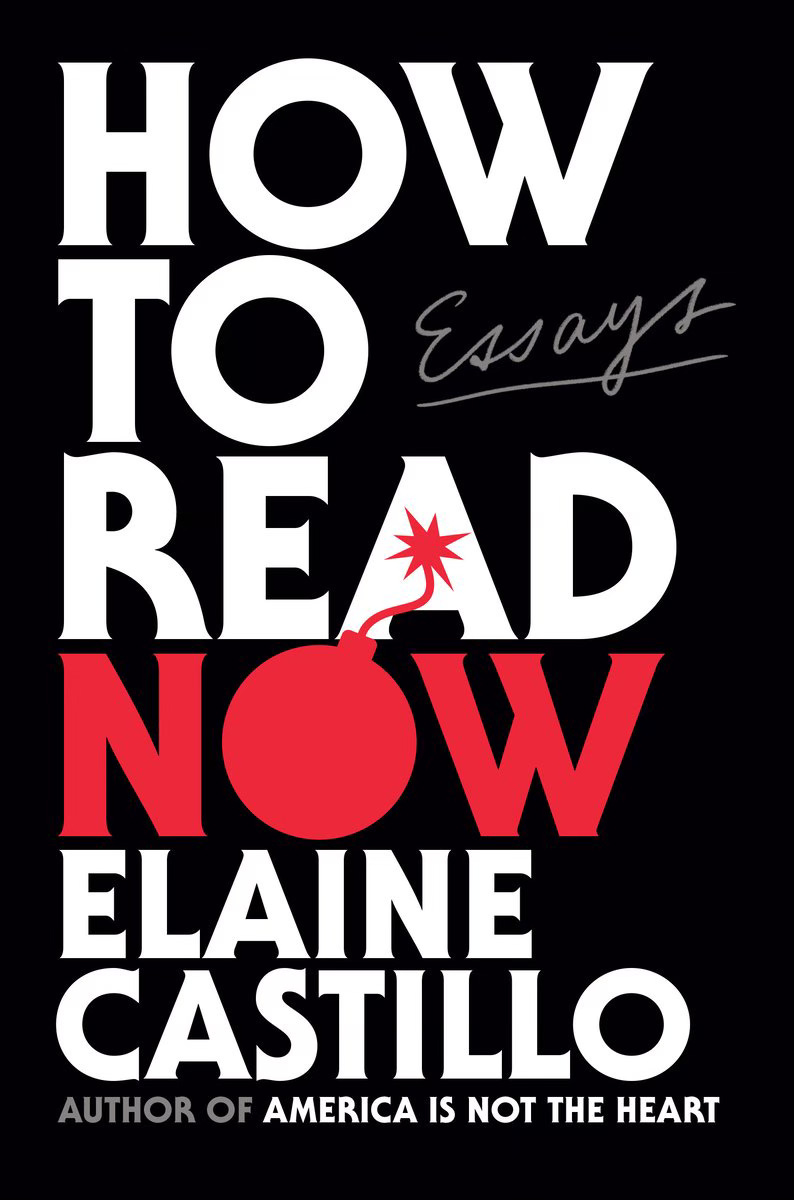
This collection of essays critiques contemporary reading culture and calls on the publishing industry and White readers to account for engaging with writers of color primarily as a way to “learn” from token examples or “develop empathy” rather than to have true, complicated experiences with art that does more than reinforce expected tropes. Her takes are often deeply researched though expressed in a withering, trolling style punctuated with millennial online slang that they practically beg for a pile-on. This book that assumes you will argue with it, and in this way it encourages you to argue a bit more with everything you read— from books to popular television to fairy tales, people’s last names, and colonial treaties. Having written in my own fumbling way about colonialism and allusions to Asia-as-backdrop, and its relationship to the performative reframing of political candidates’ backgrounds for an uncritical public in her novel Democracy myself, I was rapt during her takedown of Didion in a chapter titled “Main Character Syndrome.” Carriers of the tote bag with her face on it may rather die than read this take.
📖Ex Libris: Confessions of a Common Reader by Anne Fadiman
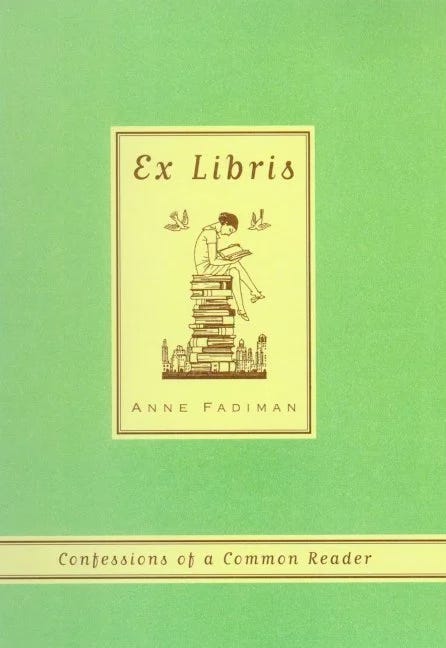
From the author of The Spirit Catches You and You Fall Down, a problematic yet fascinating piece of the American “cultural competence” canon in its own right, this is a book of 18 humorous essays about the joys/manic psychosis of being a bookworm. Fadiman is the daughter of the same Clifton Fadiman, renowned American literary critic and author of the list Kanakia features in her contemporary guide. He features prominently in a few of these essays, providing a window into what it’s like to grow up without a doubt as to the literary inheritance that is your birthright. If you also inherited bookworm tendencies from a dad figure in your life or have partnered with one to raise a child who loves books, this one could make a great Father’s Day gift.
So…
Which readers on reading would you recommend adding to this list?
How do you decide which books to add your TBR? And which to get rid of?
ICYMI
Wednesday, May 20 at 9PT/12ET I’ll be LIVE with Andrea Bartz: Get It Write to chat about what I know about what authors should know about book festivals. If you’ve ever wondered what that’s all about, join us!
And thanks to a couple new paid subscribers.
Will Schube publishes very cool interviews with creative people about what they do with their spare time over at The Hobbyist, a newsletter I can’t believe hasn’t blown up yet. And B.K. O'Connor who I was thrilled to discover has published her first book, Eve: A Novel recently! I really appreciate your support.
Thanks. The Guardian list was so lumpy - but delighted to find one of my personal top ten, A House for Mr. Biswas. And when will Lolita stop being found on these lists? Style as the excuse for pushing pedophilia?
Oh godddd I need to stop reading posts like these, my bookshelves are groaning! In all seriousness, I’ve ordered “How to read now”, thank you so much for what sounds like an amazing recommendation! 😎