Julia Phillips's Sister Novels
Bear and Disappearing Earth complement each other like fairy tale sisters
Have you ever gotten to the end of a novel and then immediately started another one by the same author?
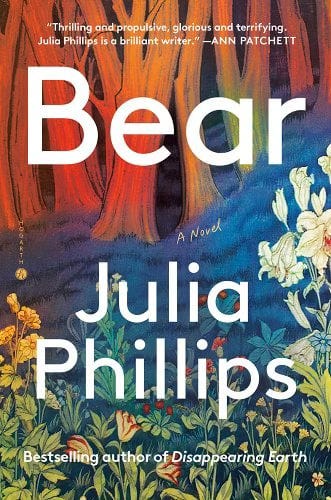
When I got to the astounding end of Julia Phillips’s Bear, a modern fairy tale of two adult sisters and their encounter with the titular wild beast, I wanted to meet its older sister.
Taken together, these books read like fairy tale sisters: different in ways that complement and expand each other, yet loyal to each other, too.
The chill, deluded little sister
Bear takes place primarily in claustrophobic spaces: the “little box trapped within a big one” of a galley station on a ferry between San Juan island and Anacortes, Washington; a vinyl-sided two bedroom shared by three adult women; storage closets and bathrooms and backseats host sexual trysts; small town life leaves little room to outgrow high school and birth order dynamics.
The cast of characters is kept minimal—a bear, older sister Elena and younger sister Sam, four other regular supporting characters, plus a figure from the past who looms over the story and eventually makes a cameo. In the simplistic, short sentences typical of fairy tales, the story follows Sam’s point of view over a few weeks, the bear providing the only relief from the sisters’ sad, repetitive daily routine of working in food service and caring for their ill mother.
The intense, over-achieving elder sister
In contrast, Disappearing Earth starts in the tradition of a hefty Russian novel, with a list of principal characters from four different families, most with multiple names, plus a host of other supporting characters. The National Book Award finalist takes its title from a story 11-year-old Alonya tells her little sister Sophia to scare her, about a village that “looked like a fairy tale,” carried out to sea by a tsunami. I almost stopped reading after the first devastating chapter, in which the pair of sisters are kidnapped from a beach on the Kamchatka peninsula in northeastern Russia. From there, the story spirals outward in fragmented chapters titled for each month of the year following the girls’ disappearance.
Across the city, beyond the volcanos, north to the tundra of reindeer herders and to out to sea and nine time zones away in Moscow—the landscape of Disappearing Earth is expansive and remote.
Each chapter introduces the point of view of another woman or girl, their stories briefly intersecting with each other but without the sustained connections or context of community. A native college student living away from home in the city for the first time. A maritime customs officer. A strict Soviet school secretary and her young daughter. A police chief’s assistant; an officer’s wife. The adult sister of a missing native teenager, a presumed runaway whose case never received the attention the white girls’ disappearance did. Awareness of the girls’ disappearance—and the way it contributes to undermining, control, the threat of violence from men in their lives-- hums in the background.
As the year wears on, the news of the disappearance sounding itself more and more like myth itself, its resolution less mystery than forgone conclusion. It’s a story specific to this place and these people—but also a story familiar any place you find women.
Eventually, nearly a year later wer meet the sisters’ mother, a journalist turned propagandist. Her perspetive makes for one of the most visceral and desperate depictions of lived grief I have ever encountered in fiction. True to genre, the kidnapper’s identity is discovered—with close attention, you’ll likely know whodunit. Nevertheless for me the suspense remained tight until the last page.
A word about endings
If the ending makes a book for you, or if you are processing any real-life endings and could use some literary catharsis to move those feelings all the way through, I recommend these books. The tension—whether, in the case of Bear, built through sheer repetitious tedium or through patient piecing together of a larger picture as in Disappearing Earth —pays off in its release.
One thing that I found interesting about reading these books together: I think each book offers the ending the other was seeking.
I’m not going to full-on spoil them for you, but if you want to go into these books without any inkling of how they end-- you know what to do here.
In Bear, typical chill little sister “Sam imagined everything better than it had ever been.” But the ending she got echoes the tone of more intense elder sister Disappearing Earth.
Oksana, a volcanological researcher whose most precious partners have vanished, describes it this way: “It hurts too much to break your own heart out of stupidity, to leave a door unlocked or a child untended and return to discover what you value most has disappeared. No. You want to be intentional about the destruction. Be a witness. You want to watch how your life will shatter.”
Disappearing Earth left me wracked with full-body sobs that obliterated my Sunday morning. When I pulled myself together, I felt clean and hopeful again.
When I picked up my phone and saw the news of Biden stepping down and endorsing Kamala Harris as presidential candidate. The same old ending is not the only ending. A woman president is again a possibility. Imagine things better than they’ve ever been.
Some questions for you
What’s the last cathartic book you read?
Who’s another author who should be read back-to-back?
Is it unfair to the second book (or sister) to compare to the first?
In case you missed it
New subscribers: Welcome! find this month’s full list of Sibling Stories here
I published another installment of the BookStack Directory. “E” is for Enthusiasts. I saved your inboxes but click below if you’d be interested in more sister stories, a newsletter focused on sad gay romances, Christian thoughts on literature, a whole women-focused literarture expertise, and more…
I may have changed my mind about my plan to move to New Zealand. TBD!


I did put down Disappearing Earth after that first chapter! I love this look at both her novels and will return to them.
In answer to Abra’s question … yes, I just did what you described in your opening question - I immediately ordered more books by Elif Shafak after finishing The Island of Missing Trees. I’m hoping to be brought back to Cyprus and possibly Turkey and to meet more tree lovers.